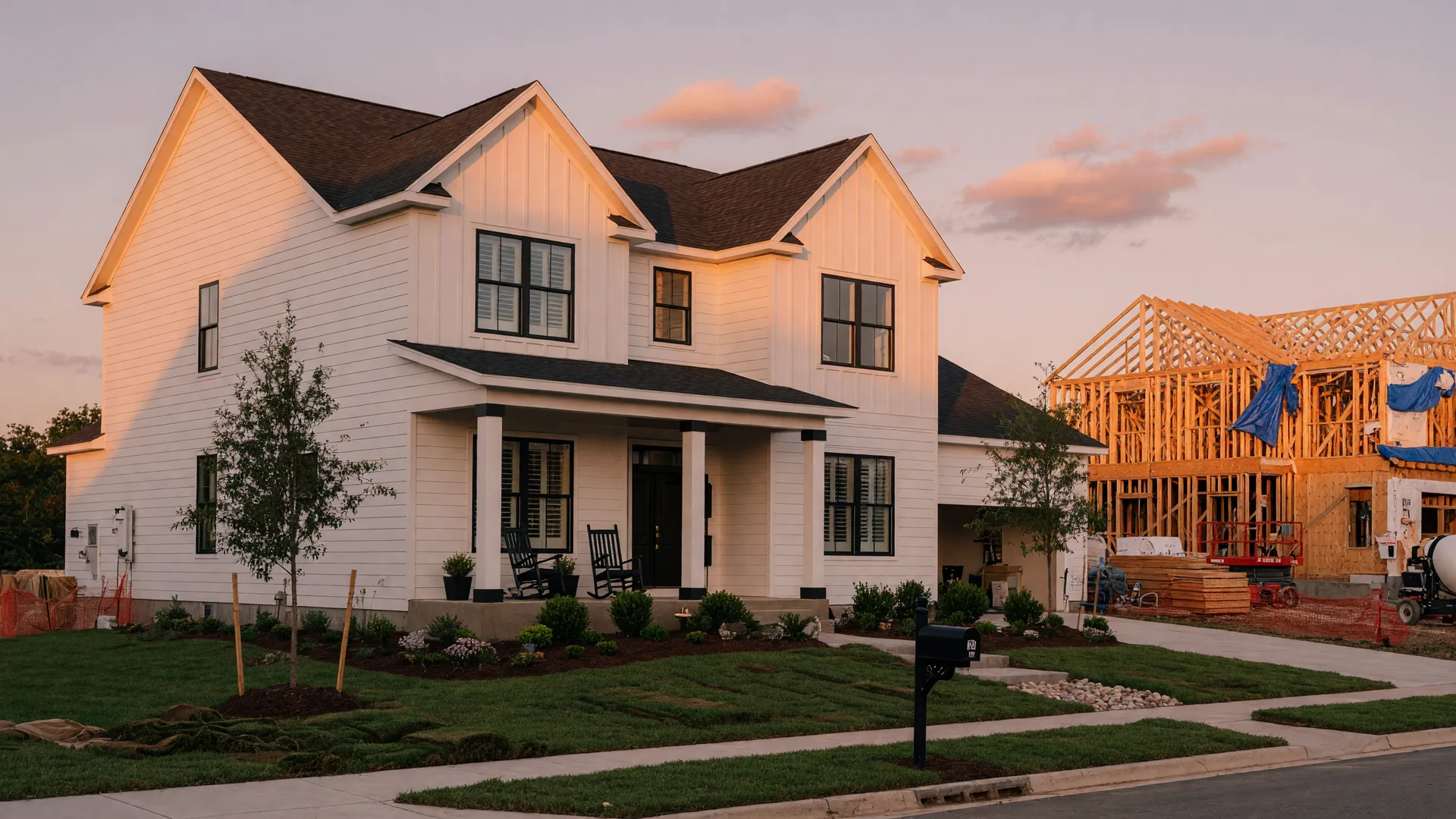
Buying new construction is a different transaction from buying a resale home, and the differences matter more than most buyers expect. This guide walks you through them in order: who represents whom in a new home sale, how builder pricing actually works, what belongs in the contract, and where to put your attention before and during construction. It is written the way I advise: no jargon, no hype, just the steps explained in order.
Why new construction is a different transaction
With a resale, you are buying a home with history: past owners, disclosures, an inspection of what is already standing, and a seller who is motivated to move. With new construction, you are buying a promise. The builder sets the price, writes the contract, builds the home, and hands you the keys, and almost every detail in between is written down by them, not by you.
That is not a warning. It is a description of the transaction, and it changes where you put your energy. On a resale you research the home's condition. On a new build you research the builder, the contract, and the timeline, because those are the things that decide whether the experience is smooth or stressful.
Who represents whom in a new home sale
This is the most important thing to understand before you visit a single model home. The sales representative in the builder's sales center works for the builder. Their job is to sell the builder's homes at the builder's prices with the builder's contract, and they are good at it. Nothing they say is a substitute for independent advice about your interests.
Bring your own agent who knows new construction, and ask how the builder handles agent registration before your first visit. Many builders only recognize a buyer's agent who was registered before or at the first visit, and once you are registered, your agent is the one person in the room whose job is to protect your interests. They earn their place by reading the contract, questioning the price, and comparing what the builder offers against what the market supports.
What the model home is, and what it is not
The model home is marketing at its best, and it is built that way on purpose. The finishes you love, the kitchen, the lighting, the outdoor living space, are almost always upgrades beyond the base price. The number on the price sheet covers the standard selections, and everything that made the model memorable becomes a line item.
Ask for the full, itemized price of the home as you would configure it, in writing: base price, lot premium, structural options, design center upgrades, and any fees. Then ask what is included in that number, because some builders include the basics and others charge for extras one at a time. The home in the brochure and the home on the lot can differ by a wide margin, and that margin is where buyers get surprised.
What the base price covers, and what it does not
Whenever a builder quotes a price, it is worth knowing exactly what that number buys. In general terms, the base price reflects the builder's standard package: the floor plan itself, the standard finishes and fixtures that come with it, and appliances where the builder includes them. Because what counts as standard varies from builder to builder, ask for a written list of what the quoted price includes before you compare one community to another.
Everything beyond that package is usually extra. Upgrades and options chosen at the design center, structural changes such as moving a wall or adding a bedroom, a premium or larger lot, and site costs like clearing, grading, or utility connections where a community charges for them separately are all priced above the base. They typically appear as separate line items, and they add up quickly. Reading the itemized price before you fall for the model home is the best protection against a surprise at the end, and any builder should be able to put that breakdown in writing.
Get your financing in order first
Nothing about new construction works well without a clear number, and the financing conversation comes before the design center, not after. Get pre-approved early, with the same full-picture math as any home purchase: taxes, insurance, and HOA dues belong in the same monthly number as principal and interest.
Take the time to compare the builder's preferred lender with your own. Builders often partner with a lender they work with regularly, and incentives are sometimes tied to using that lender. Ask directly whether any incentives or credits depend on it, and compare the two loan estimates side by side in writing before you choose. The better loan is a better loan, whether or not the builder recommends it.
Choose the lot and the plan with your exit in mind
Most buyers choose the floor plan first and the lot second. The order is worth flipping. The lot decides your light, your view, your privacy, and your future buyer's reaction, and none of those are easy to change later. Walk the community at different times of day and on a weekend, when traffic and noise are at their most honest.
Ask where the future phases will be built and what is planned nearby: roads, common areas, amenities, open space. Backing to a busy road, facing a parking lot, or sitting at the edge of the community carries a price today for a reason, and a resale difference later for the same reason. Ask about the HOA as well: what it covers, what it costs, and whether the rules fit how you actually live.
Read the builder's contract like it is yours
Builder contracts are written by the builder's attorneys, and they protect the builder first. That is normal. What matters is that you understand every clause before you sign, because the contract governs the parts of the transaction where things can go wrong: the deposit, the completion date, and the changes you make along the way.
Pay particular attention to: what happens to your deposit if you cancel, and what happens if the builder cancels; whether the completion date is a promise or an estimate, and what happens if construction runs long; how change orders are priced and approved, and that they are usually due before the work is done; whether the contract sends disputes to arbitration instead of court; and the warranty; what is covered, for how long, and how a claim is filed. Read the contract before the design center, because the choices you make there become part of this contract.
Inspect at the two moments that matter most
A new home can still have defects, and the builder's quality control is not the same as an independent set of eyes. The right time to look is before the drywall goes up, while the framing, plumbing, electrical, and insulation are visible and fixable. A pre-drywall inspection by an independent inspector is the single most valuable check on a new build, because once the walls close, most of what matters is hidden.
Then, before closing, do a careful final walkthrough and build a punch list of every unfinished or damaged item. The builder should complete those items, and the walkthrough is the moment to make that official. Understand the warranty before you rely on it: new homes typically come with builder warranties, but the terms vary by builder, and coverage differs for different systems. Ask for the warranty documents in writing and read what is actually covered, and for how long, before you close.
Close with the same care as any purchase
Closing on a new home adds a few checks that resales do not have. Confirm the certificate of occupancy is in place, which is what makes the home legal to occupy. Verify that the finished home matches the contract and the options you ordered, which is why the final walkthrough checks appliances, finishes, and layout against your paperwork. And review the title and settlement work just as carefully as any other purchase, because the deed, the taxes, and the closing numbers are still yours to verify.
Why work with an agent who knows construction
I came to real estate with a background that is directly relevant to this question. Before I became a full-time Realtor, I worked in construction and project management: as an Assistant Project Manager at AECOM, one of the top design firms in the world, and directly under the CEO of Clark Builders Group, one of the largest builders in the Washington DC metro area, on projects and proposals. I also spent years on the title and settlement side of real estate, assisting buyers and sellers at closings in Virginia.
I am licensed in Washington DC, Maryland, Virginia, and Florida. Whether you are looking at new construction in the DMV or in Southwest Florida, I can read the builder's timeline, weigh their price against the market, and walk the process with you in plain language.
One line to remember: with new construction you are not buying a finished house, you are buying a promise delivered on a timeline. Your job is to verify the promise in writing, at the right moments, from contract to keys, and an agent who knows construction makes that verification a lot easier.